
The debate over the best format for learning, particularly in music, has intensified since the rise of online classes during the MCO. Each method—online, physical, and hybrid—has its strengths and challenges, but the best option depends on individual needs and circumstances. Though, of course, I’ll go a little in-depth into each of them in this post.
Online Classes
Online classes offer unmatched convenience, especially for location and travelling issue. With a stable internet connection, students can attend lessons from anywhere even cross country.
We have this experience where Japanese students learning piano with Malaysian teacher for the sake of learning improving their english. Some China student learn online with Malaysian teacher to go for ABRSM syllabus. We also have Malaysian students who migrate to China and for this reason, they switch to online lesson. So besides the language and syllabus, there are other factor such as constant travelling, currency exchange rate, fees rate, and relationship too.
However, this convenience comes with downsides. Students may suffer from a lack of hands-on guidance. Teachers can only offer verbal feedback, which may slow progress. Additionally, students must have adequate instrument at home to learn. Some instruments like guitar or ukulele are easier to come by but a piano or drum set is harder.
Physical Classes
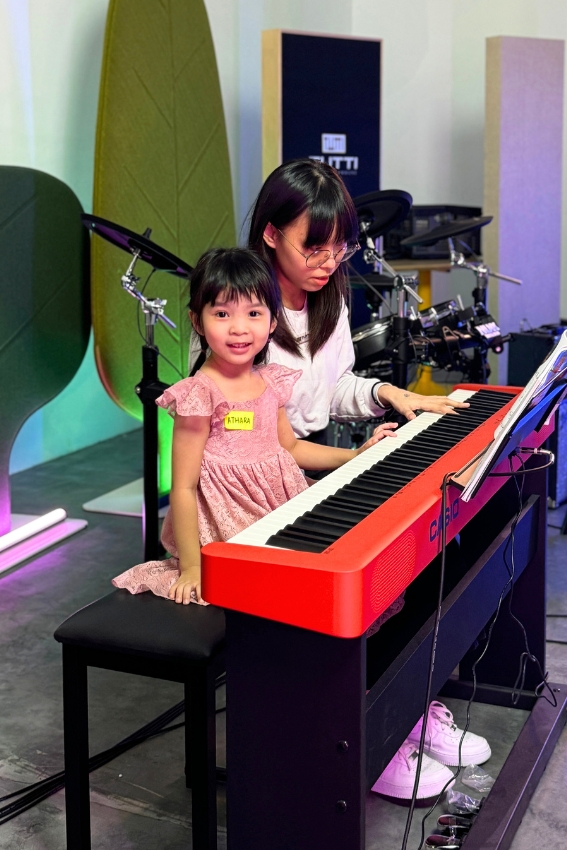
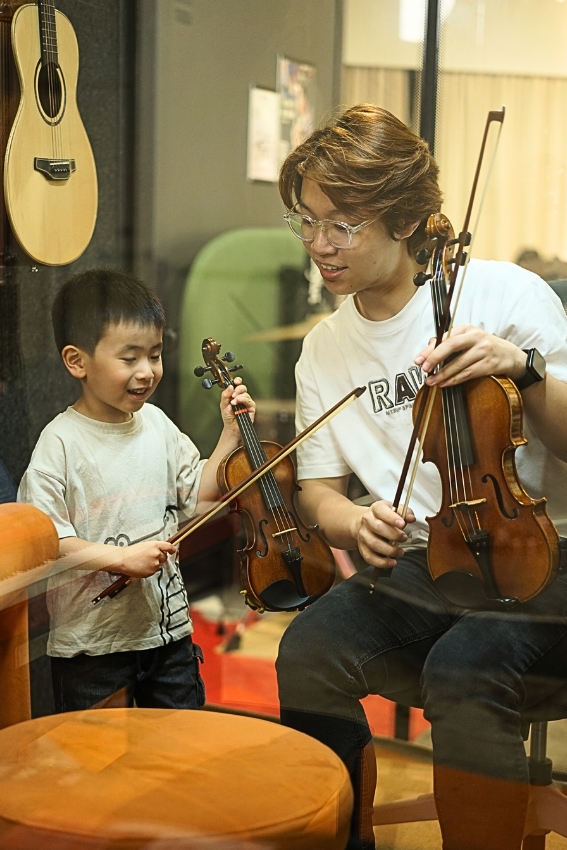
Physical classes provide the familiar structure of in-person learning. For music students, this means immediate feedback, immediate correction, hands-on guidance, and access to musical instruments that school provide. These benefits can significantly enhance the learning experience. Teachers may also offer supplementary insights beyond the core topic, such as motivation, listen to problem, brain storm ideas and personal encouragement.
On the flip side, students must physically attend music schools, limiting options based on location and transportation. Scheduling can also be less flexible, as it requires aligning with the availability of both students and instructors.

Hybrid Classes: The Best of Both Worlds
Hybrid classes blend online and physical formats, offering flexibility without sacrificing the benefits of in-person instruction. If a student can’t attend a physical class, they can switch to an online session, providing adaptability in scheduling.
While hybrid classes offer flexibility, they require careful planning to balance both formats effectively. Success largely depends on how well students manage their time and organize their lessons.
Conclusion
Each format—online, or physical—has its advantages. The best choice depends on the student’s learning style, preferences, and circumstances. We are now living at the era where technology provide us with such convenience but bare in mind that human touch are still important especially for the younger kid’s development.



Leave a Reply